

Table of Contents
- Introduction: The Art of Turning Away from the Camera
- A Starlight Pedigree: The Heritage of Hollywood Royalty
- The Cultural Footprint of Lee Majors
- Karen Velez and Life Behind the Tabloid Headlines
- Brothers in the Background: Growing Up Twin in Southern California
- The Dynamic Between Trey and Dane Luke Majors
- Protecting Childhood in an Age of Exposure
- The Lure of the Pacific: Swapping Red Carpets for Ocean Swells
- Finding Sanctuary in San Diego’s Coastal Culture
- The Technical Mechanics of Surfboard Design
- Inside the Shaping Bay: Craftsmanship and Discipline
- Sculpting the Blank: Precision, Foam, and Hydrodynamics
- The Ethos of Hand-Crafted Art in a Digital World
- Family Connections and Modern Perspective
- A Custom Gift for a Brother and Friend
- The Intentional Choice of Living Off-Grid
- Redefining Legacy: Building Identity on Your Own Terms
Introduction: The Art of Turning Away from the Camera
trey kulley majors What does it truly take to turn your back on a ready-made legacy? When your surname carries instant recognition across multiple generations, the default trajectory seems almost pre-ordained. Most offspring of television icons step naturally toward talent agencies, studio auditions, and red-carpet appearances, utilizing an inherited advantage that takes millions of others a lifetime to build. Yet, for Trey Kulley Majors, the glare of the studio spotlight held far less intrigue than the clean, salt-crusted air of the Pacific coastline.
The son of prime-time legend Lee Majors and former model Karen Velez grew up inside the perimeter of American pop culture stardom. His early years were framed by an environment where television cameras, public admiration, and persistent media interest were constant elements of daily life. Choosing not to leverage that proximity for a career on screen requires an exceptionally grounded sense of self. Trey chose to chart an entirely unscripted life, leaving behind the commercial mechanics of Tinseltown to master one of the most demanding physical crafts in coastal culture: hand-shaping high-performance surfboards.
To examine the journey of Trey Kulley Majors is to explore a masterclass in personal independence. It is the story of how an individual can honor a famous family tree without allowing it to dictate their personal ambitions. By replacing the performative nature of Hollywood with the tactile precision of a San Diego shaping bay, Trey has built a life centered around authenticity, functional art, and quiet self-determination.
A Starlight Pedigree: The Heritage of Hollywood Royalty
The Cultural Footprint of Lee Majors
Understanding the environment Trey grew up in requires taking a close look at the towering career of his father, Lee Majors. Born Harvey Lee Yeary, Lee Majors became a defining figure of twentieth-century American television. His rise began in the late 1960s with his breakout portrayal of Heath Barkley in the Western series The Big Valley, standing shoulder-to-shoulder with cinema legend Barbara Stanwyck. That role established him as a quintessential American leading man, characterized by physical confidence and understated warmth.
However, it was his starring role in the 1970s science-fiction phenomenon The Six Million Dollar Man that propelled him into international superstardom. Playing Steve Austin—a former astronaut rebuilt with advanced cybernetic limbs—Lee Majors became embedded in global pop culture. Decades before the superhero film genres dominated modern cinema, Austin was the ultimate screen icon, complete with action figures, lunchboxes, and widespread syndication. Lee followed this success in the 1980s by leading The Fall Guy as stuntman Colt Seavers, solidifying his rare status as an actor who headlined three smash-hit network shows across three consecutive decades.
Karen Velez and Life Behind the Tabloid Headlines
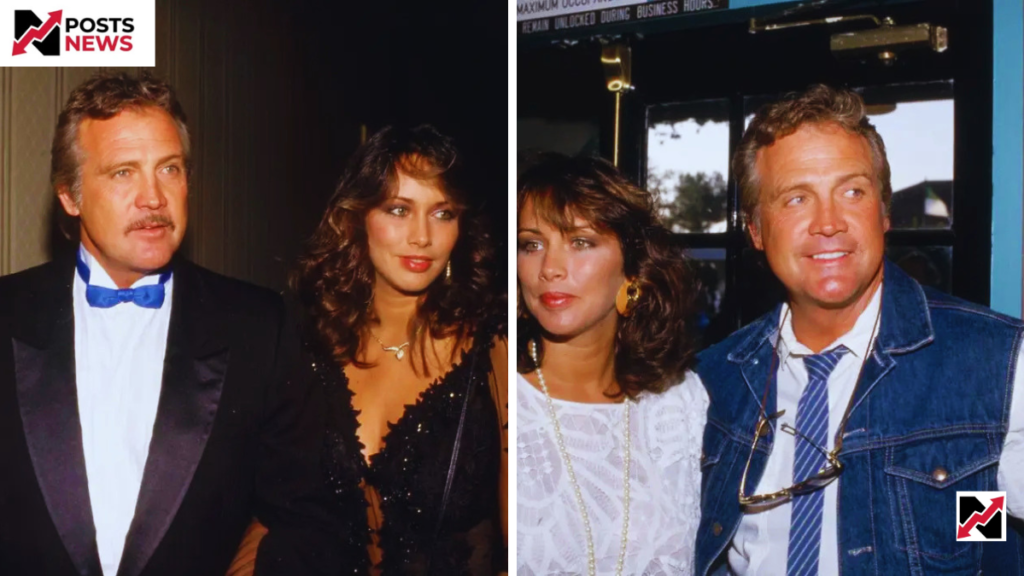
In 1988, Lee Majors married Karen Velez, a prominent model and former Playboy Playmate of the Year (1985). Their high-profile marriage was a regular fixture in entertainment publications throughout the late 1980s and early 1990s, embodying the classic glamour associated with Hollywood’s social elite. Together, the couple welcomed three children: a daughter, Nikki Loren, and fraternal twin sons, Dane Luke and Trey Kulley.
Though the couple divorced in 1994, both parents worked diligently to provide their children with a stable, grounded home life. Karen Velez focused on protecting her children from unnecessary media intrusion, ensuring that the atmosphere inside the household was defined by family values rather than the demands of public life. Raised with an insider’s view of celebrity culture, Trey and his siblings learned early on to see fame as merely a profession rather than an absolute measure of personal worth.
Brothers in the Background: Growing Up Twin in Southern California
The Dynamic Between Trey and Dane Luke Majors
On October 22, 1992, Karen Velez gave birth to fraternal twins, Dane Luke Majors and Trey Kulley Majors. Growing up as a twin creates a distinct psychological foundation. From childhood into adulthood, twins share an innate sounding board, an immediate peer, and a deep emotional connection that operates almost effortlessly.
As the brothers matured, their individual interests naturally diverged, reflecting their distinct personal inclinations. Dane Luke Majors eventually felt drawn toward the creative performing arts, stepping into acting with appearances in independent films such as Honor Council (2017) and the feature film Alone. Conversely, Trey felt no inclination toward performance art or auditions. He gravitated toward hands-on mechanics, outdoor physical challenges, and creative work that did not rely on an audience for validation.
Protecting Childhood in an Age of Exposure
During the 1990s and early 2000s, raising children away from the public gaze required deliberate effort from famous parents. Unlike today’s digital era—where celebrity families often broadcast daily routines across personal social channels—Lee Majors and Karen Velez maintained a firm boundary around their family life.
This protection allowed Trey Kulley Majors to enjoy an uncomplicated, unexamined childhood. He spent his youth exploring Southern California’s coastal landscapes, developing a passion for physical fitness, water sports, and functional design. Free from the pressure to cultivate a public persona or follow a predetermined industry path, Trey had the mental space needed to discover his genuine passions.
The Lure of the Pacific: Swapping Red Carpets for Ocean Swells
Finding Sanctuary in San Diego’s Coastal Culture
As Trey transitioned into young adulthood, the coastal city of San Diego became his adopted center of gravity. Far removed from the studio lots of Los Angeles, San Diego is home to a world-renowned surf culture. It is an environment built on patience, deep respect for nature, and an understanding of physical design mechanics.
For Trey, the ocean offered a level of pure authenticity that the entertainment world could never mirror. Waves do not recognize celebrity names, social status, or family history. The water judges every individual purely on skill, physical composure, and respect for natural elements. In this environment, Trey found a sense of peace and purpose that aligned with his quiet disposition.
The Technical Mechanics of Surfboard Design
To an untrained observer, a surfboard appears to be a basic piece of sculpted foam wrapped in protective fiberglass. To an experienced waterman, however, a high-performance surfboard is a sophisticated hydrodynamic craft engineered to operate dynamically within fluid forces. Every micro-variation in outline, edge design, concavity, and rocker line directly alters how the board generates speed, holds an edge, and releases pressure through a turn.
Understanding surfboard design requires an intuitive grasp of physics, fluid dynamics, and materials science. It is a subtle discipline where a millimeter of foam removed from the rail can completely change how a craft behaves on a wave face. This combination of hands-on sculpting and technical functionality captured Trey’s dedication, prompting him to pursue the craft seriously.
Inside the Shaping Bay: Craftsmanship and Discipline
Sculpting the Blank: Precision, Foam, and Hydrodynamics
Trey Kulley Majors did not enter the surfing industry through celebrity endorsements or shortcuts. He began at the foundation, learning the craft through long hours of manual effort in traditional shaping bays. His career development led him to work alongside master craftsmen at Rusty Surfboards, one of the world’s most respected names in custom surfboard design, founded by shaper Rusty Preisendorfer in San Diego.
Working in a high-caliber shaping environment demands absolute precision. Trey mastered the art of inspecting raw foam blanks, adjusting rocker profiles, hand-planing rail lines, and sculpting bottom contours tailored specifically to individual surfer weights and wave conditions. Rather than relying entirely on automated computer-numeric-control (CNC) cutting machines, authentic shaping relies on a human eye and sensitive hands to detect microscopic imperfections across
Trey’s commitment to this art form earned him genuine respect among local surfers and industry peers. His work at Rusty Surfboards reflects a deep devotion to functional art—creating tools built to withstand nature’s unpredictable power.
The Ethos of Hand-Crafted Art in a Digital World
In an era increasingly dominated by virtual media, immediate gratification, and mass automated production, devoting oneself to manual craftsmanship is a deliberate lifestyle statement. Surfboard shaping is demanding work that involves long hours standing over sanding benches, working through fine foam dust, and meticulously checking templates for absolute balance.
Yet, for an artisan like Trey, the reward is immediate and deeply satisfying: creating a functional, handcrafted piece of equipment that allows someone to ride the force of a moving ocean wave. This philosophy matches Trey’s preference for a quiet, grounded life. He avoids flashy marketing and public fanfare, finding fulfillment in the craftsmanship itself and the freedom to live on his own terms.
Family Connections and Modern Perspective
A Custom Gift for a Brother and Friend
Although Trey Kulley Majors maintains a private life away from public scrutiny, his ties to his family remain strong. His relationship with his twin brother, Dane, reflects a deep foundation built on mutual respect for one another’s independent paths. While Dane chose the performing arts and Trey embraced craftsmanship, their shared upbringing created a lasting connection.
A clear example of this bond occurred in 2021, when Trey crafted a custom surfboard specifically for Dane. Featuring a striking pink-marbled design, the board was hand-shaped by Trey from start to finish. When sharing a rare image of the board, Trey affectionately called Dane his “best friend.” The gesture demonstrated not only Trey’s growing skill as a shaper, but also the enduring affection shared between the siblings.
The Intentional Choice of Living Off-Grid
In today’s interconnected culture, privacy is a choice that requires conscious effort. Many individuals with ties to prominent figures turn their family names into digital brands for quick visibility. Trey Kulley Majors has deliberately rejected this approach, keeping his daily life quiet, personal, and focused on his work.
He treats his family background with quiet respect, choosing never to use it for personal leverage. When questions about his heritage come up, Trey lets his dedication to his craft serve as his answer. By keeping his life private, he maintains full control over his own story, free from the cycles of media interest that often surround celebrity families.
Redefining Legacy: Building Identity on Your Own Terms
The narrative of Trey Kulley Majors offers a refreshing perspective on family identity and personal ambition. Society often expects children to follow closely in the footsteps of famous parents, assuming that access to an established industry should naturally dictate a career choice. Steering away from that path requires clear vision and self-assurance.
Trey’s journey proves that honoring family heritage does not require duplicating it. A person can value their family’s hard work and creative passion while applying those same principles in an entirely different domain. Lee Majors built an enduring legacy on screen through iconic television performances; Trey Kulley Majors is building his through fine craftsmanship, design, and a dedication to personal independence.
Ultimately, Trey’s life provides an inspiring example for anyone learning to navigate expectations while pursuing their own identity. By choosing the quiet focus of a shaping bay over the bright lights of Hollywood, Trey has shown that real success is found in doing what you love, mastering your chosen trade, and living fully on your own terms.
Frequently Asked Questions (FAQs)
1. Who is Trey Kulley Majors?
Trey Kulley Majors is an American artisan and custom surfboard shaper. He is widely recognized as the son of iconic television actor Lee Majors (The Six Million Dollar Man) and former model Karen Velez. Unlike many Hollywood offspring, Trey has chosen a quiet career in coastal craftsmanship rather than entertainment.
2. When was Trey Kulley Majors born?
Trey Kulley Majors was born on October 22, 1992. He was born alongside his fraternal twin brother, Dane Luke Majors.
3. What does Trey Kulley Majors do professionally?
Trey is a professional surfboard shaper based in San Diego, California. He has worked with top industry manufacturers, including Rusty Surfboards, creating custom, hand-sculpted boards designed for high-performance surfing.
4. Has Trey Kulley Majors ever acted in television or film?
No, Trey has never pursued an acting career. While his father Lee Majors is an iconic Hollywood star and his twin brother Dane has acted in independent films, Trey has remained focused on surfboard design and craftsmanship.
5. Who are Trey Kulley Majors’ parents?
His father is veteran actor Lee Majors, famous for starring roles in television classics like The Big Valley, The Six Million Dollar Man, and The Fall Guy. His mother is Karen Velez, a former model and 1985 Playboy Playmate of the Year.
6. Does Trey Kulley Majors have siblings?
Yes. Trey has a fraternal twin brother, Dane Luke Majors; an older sister, Nikki Loren Majors; and an older half-brother, Lee Majors II, from his father’s first marriage to Kathy Robinson.
7. What is Trey Kulley Majors’ relationship with his twin brother Dane?
Trey shares a close bond with his twin brother Dane. In 2021, Trey hand-shaped a custom pink-marbled surfboard as a gift for Dane, describing his brother as his “best friend.”
8. Where does Trey Kulley Majors live today?
Trey lives in the San Diego, California area, where he remains connected to the local surfing community, shaping boards, traveling, and enjoying a private life away from Hollywood media.
Final Summary
Trey Kulley Majors presents an inspiring study in personal independence within a high-profile Hollywood lineage. As the twin son of prime-time icon Lee Majors and former model Karen Velez, Trey had immediate access to the entertainment industry. Instead, he consciously chose to step away from the glare of Hollywood to forge his own identity as a master surfboard shaper in San Diego.
Working alongside top industry names like Rusty Surfboards, Trey has built a respected career founded on craftsmanship, hydrodynamic design, and a deep appreciation for coastal living. His life illustrates a timeless truth: genuine success is not measured by inherited fame or public visibility, but by the dedicated pursuit of personal mastery, functional artistry, and living authentically on your own terms.